



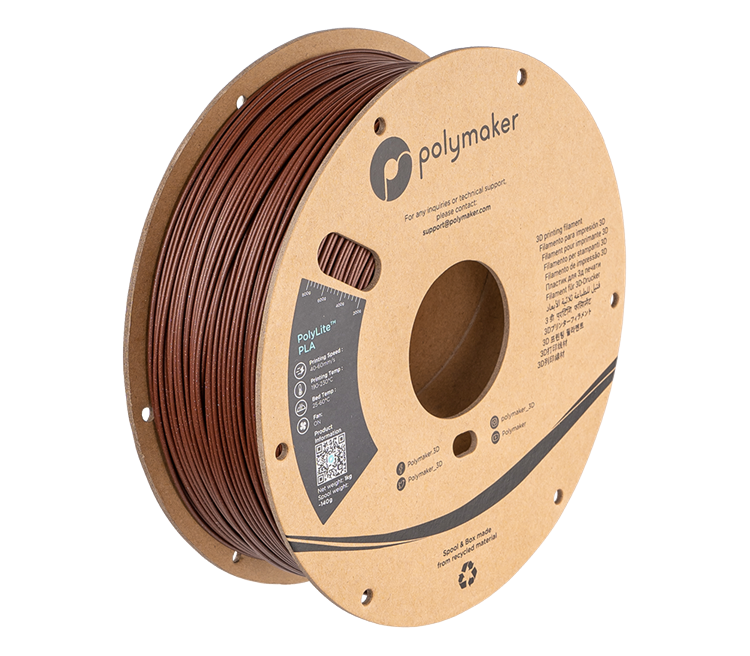
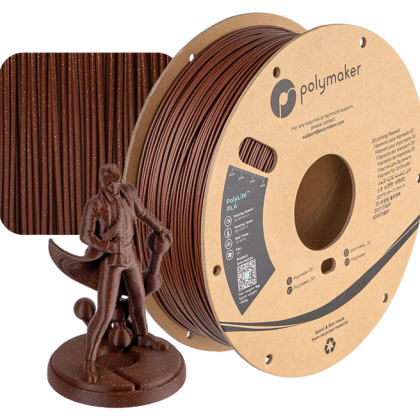
PLA Galaxy Dark Red 1000g Panchroma
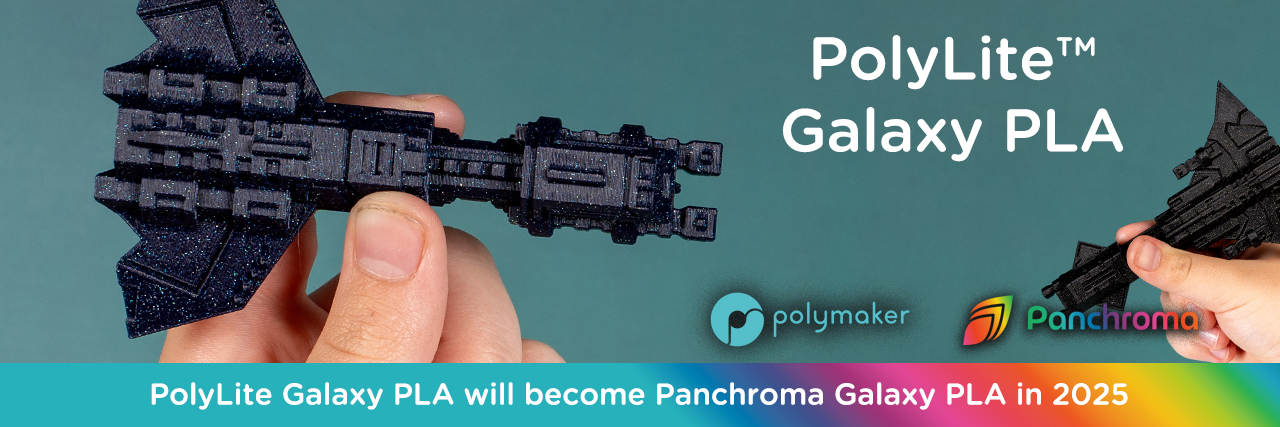
Panchroma™ Galaxy PLA – impressive galactic effect
Panchroma™ is a series of 3D printing filaments manufactured from high quality raw materials to ensure exceptional quality and reliability.
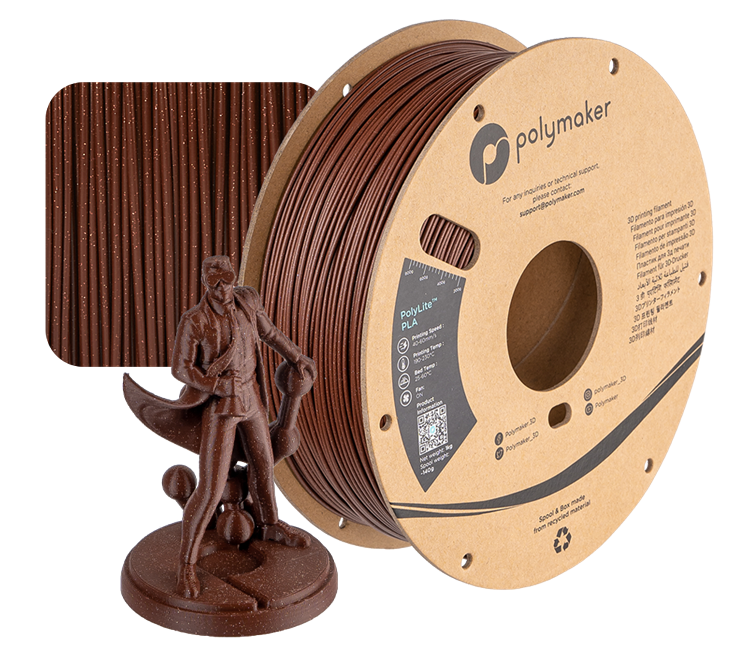
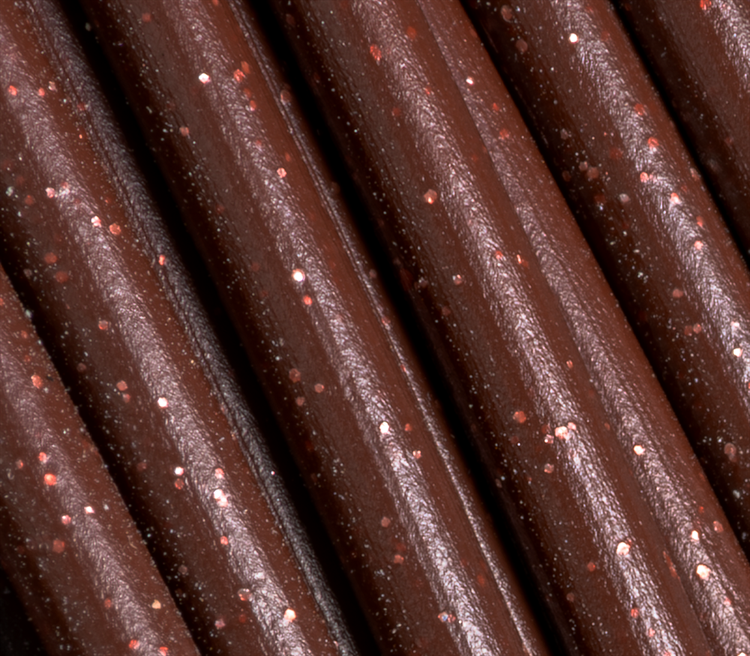
Panchroma™ Galaxy PLA is a high quality PLA with fine reflective particles (glitter) that create rich dark colors with an impressive “galaxy” sparkle effect.
An ideal choice for projects that need to attract attention and feature a stylish and unique visual finish.
Features
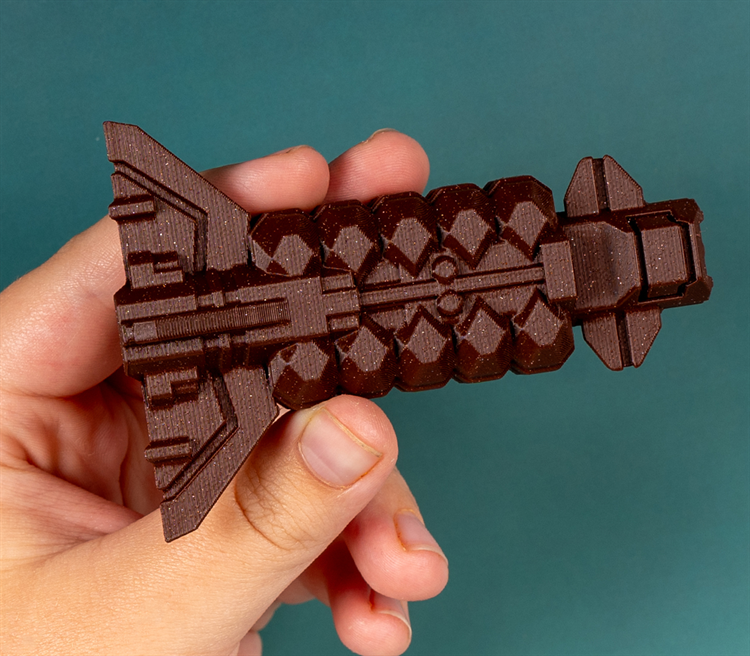
- Star Galaxy effect – Panchroma™ Galaxy PLA is a high quality PLA with fine reflective particles (glitter) that create a series of dark sparkling colours with an impressive galaxy effect. This “star” effect makes Panchroma™ Galaxy PLA an excellent choice for astronomy models, sci-fi toys, figurines and a wide range of fun and aesthetically appealing projects.
- Strength and rigidity – Panchroma™ Galaxy PLA is based on the same high molecular weight PLA as Panchroma™ PLA, making it one of the hardest PLA materials on the market. The combination of good tensile strength, excellent interlayer adhesion and high hardness makes it ideal for product designs and prototyping where a rigid and easy to print material is required.
- Compatibility First – Panchroma™ Galaxy PLA is compatible with a wide range of 3D printers equipped with a nozzle 0.6 mm or larger. Works well with most printing surfaces with a thin adhesive layer. A heated plate is optional, but can be used at 40-60°C for better results (max 60°C).
- Anti Heat Creep Technology – Panchroma™ Galaxy PLA is manufactured with Polymaker’s Jam-Free™ technology, which improves the thermal stability of filament with softening temperatures above 140°C and provides excellent print quality without the risk of nozzle clogging caused by heat creep[1].
- Uncompromising quality – Panchroma™ Galaxy PLA is manufactured from high quality raw materials, including Ingeo® from NatureWorks. NatureWorks is a leading US-based global supplier of biopolymers with a portfolio of high quality PLA materials made from rapidly renewable plant resources. The combination of Polymaker’s innovative R&D technologies, advanced compounding and extrusion systems with Ingeo® resins ensures a reliable 3D printable filament for beautiful and precise models.
Print settings
| Nozzle temperature | 190°C – 230°C Use nozzle 0.6 mm (or larger) |
| Temperature of the working plate | 25°C – 60°C |
| Printing surface material | Works well with most surfaces, e.g. glass, blue tape, BuildTak®, etc. |
| Surface treatment | Ecofixy adhesive can be used to improve adhesion. |
| Cooling fan | ON. |
| Print speed | 40 mm/s – 60 mm/s |
| Recommended maintenance material | Single extruder: Self-supportingDouble extruder: PolyDissolve™ S1 (dissolves in water) PolySupport™ (easy release support material) |
Specification
| Net weight | 1 kg |
| Material type | Galaxy PLA |
| Density | 1.17 g/cm³ (at 21.5°C) |
Compatibility
Panchroma™ Galaxy PLA has been developed with maximum compatibility and excellent printability in mind on a wide range of 3D printers. Due to the glitter particles contained, it is important to use a 0.6 mm nozzle when printing with this filament.
Jam-Free™ technology incorporated into Panchroma™ PLA improves compatibility with all-metal hotend designs that are prone to heat creep problems.
High stiffness materials such as Panchroma™ Galaxy PLA work best in configurations where the filament path is smooth and without sharp curves.
Of course, given the thousands of different 3D printer models on the market, we can’t guarantee that every type of filament will be fully compatible with every printer. Experience with the slider and fine tuning of parameters are always necessary to get the most out of the material. Before starting an ambitious project, we recommend printing familiar calibration tests to build or adjust the filament profile.
Technical data
All test specimens were printed under the following conditions:
- Nozzle temperature: 205°C
- Worktop temperature: 45°C
- Infill: 100%
- Cooling fan: ON.
All specimens were conditioned at room temperature for 24 hours prior to testing.
THERMAL PROPERTIES
| Value | Test method | |
|---|---|---|
| Glass transition temperature | 61°C | DSC, 10°C/min |
| Heat Deflection Temperature (HDT) | 0.45 MPa – 59.8°C 1.8 MPa – 58.1°C HDT curve |
ISO 75 |
| Vicat softening point | 62.9°C | ISO 306, GB/T 1633 |
MECHANICAL PROPERTIES
| Value | Test method | |
|---|---|---|
| Jung’s Module (X-Y) | 2636 ± 330 MPa | ISO 527, GB/T 1040 |
| Tensile strength (X-Y) | 46.6 ± 0.9 MPa | ISO 527, GB/T 1040 |
| Flexural strength (X-Y) | 85.1 ± 2.9 MPa | ISO 178, GB/T 9341 |
| Charpy impact strength (X-Y) | 2.68 ± 0.16 kJ/m² | ISO 179, GB/T 9343 |



There are no reviews yet.