


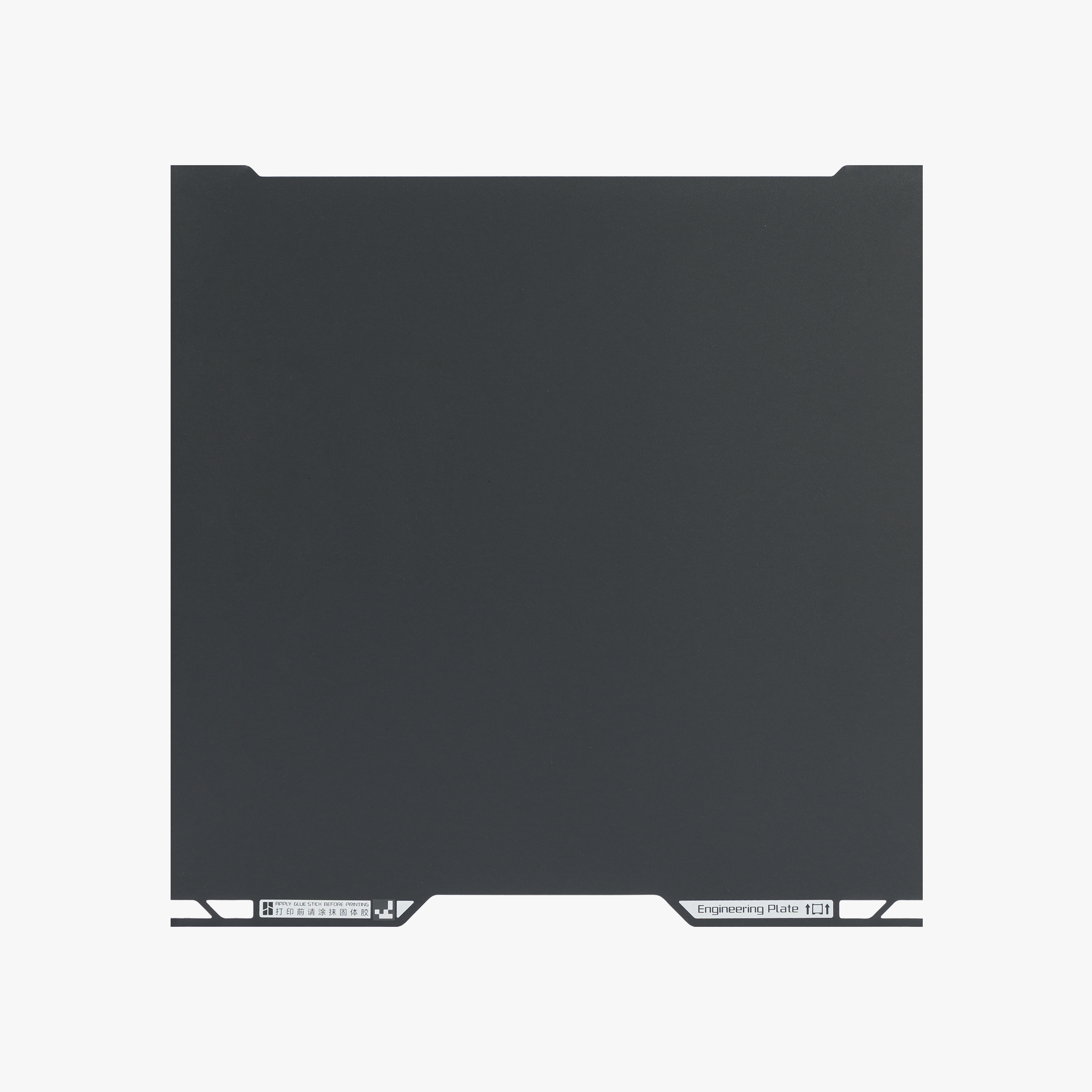
Engineering Plate H2C Bambu Lab
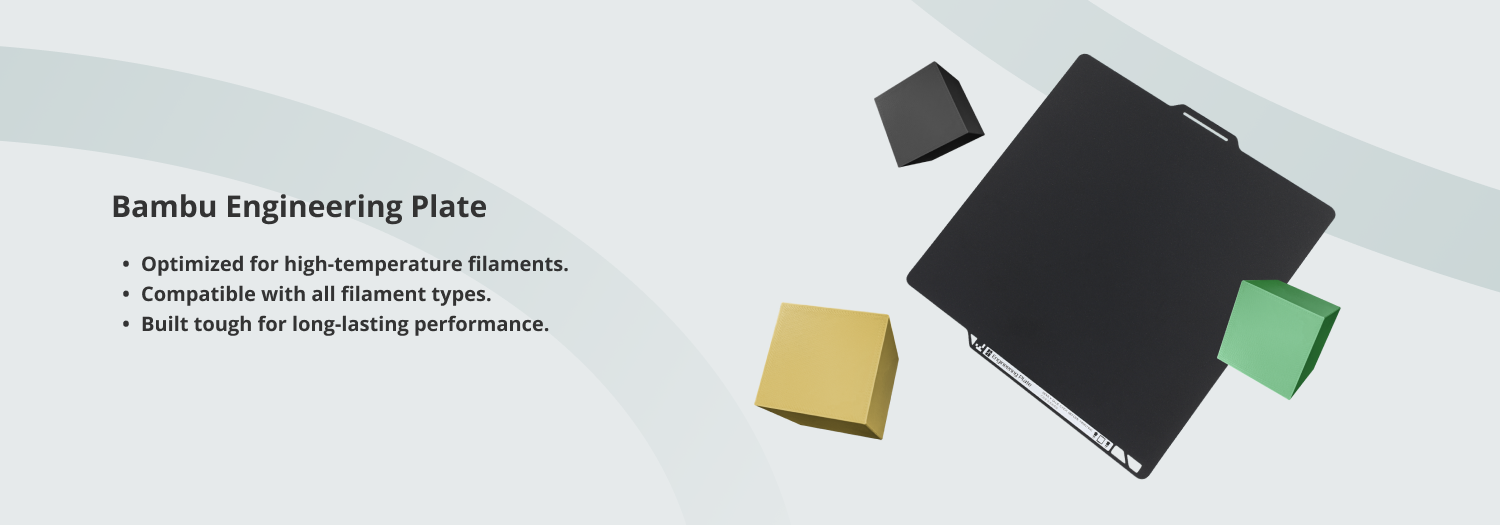
One work plate for all filaments
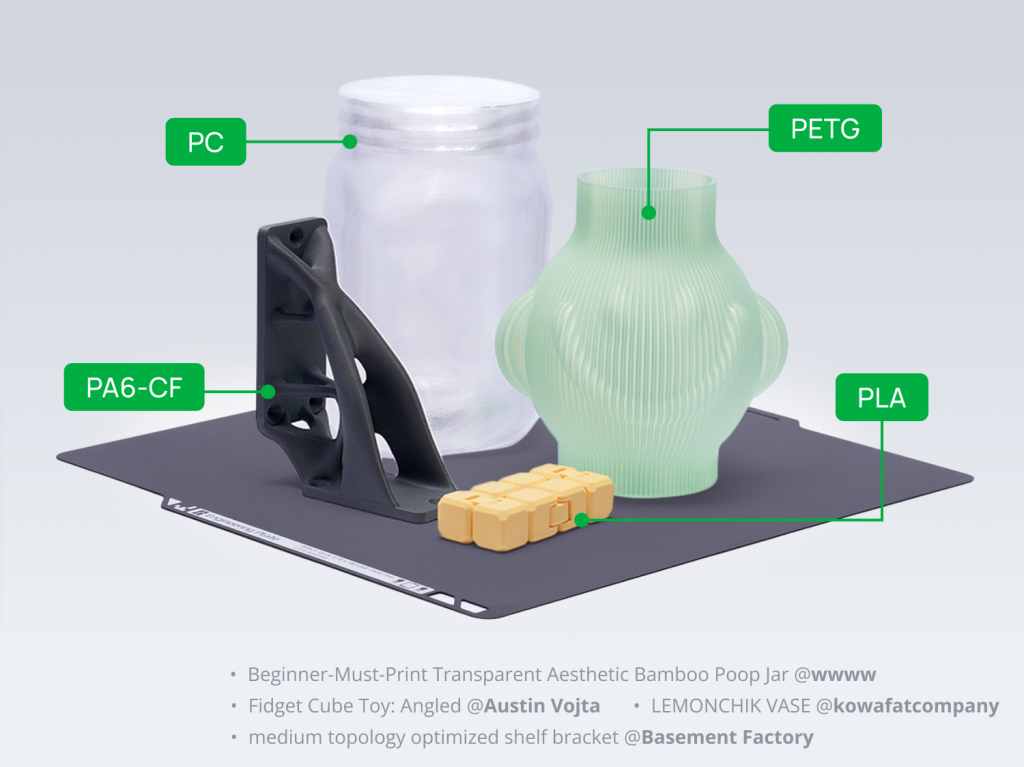
With a thin layer of adhesive Engineering Plate is compatible with our entire range of filaments.
This is the perfect all-round solution when you’re not sure which plate to use.
Durable smooth surface finish
The renewed coating significantly improves the plate’s resistance to high temperatures, scratching and corrosion.
Designed to withstand extended high temperature printing and hundreds of clean and peel cycles,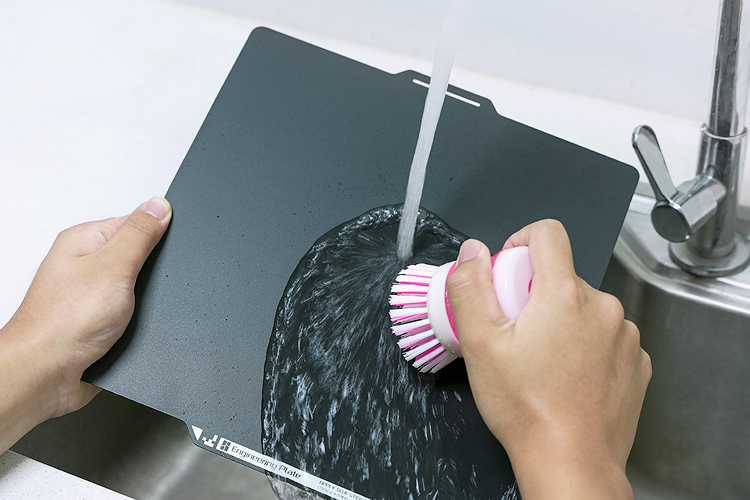
the smooth and reliable surface guarantees stable adhesion every time.
Smooth and natural surface finish
The smooth base coat gives a flat and fine texture to the bottom surface of the printed part, 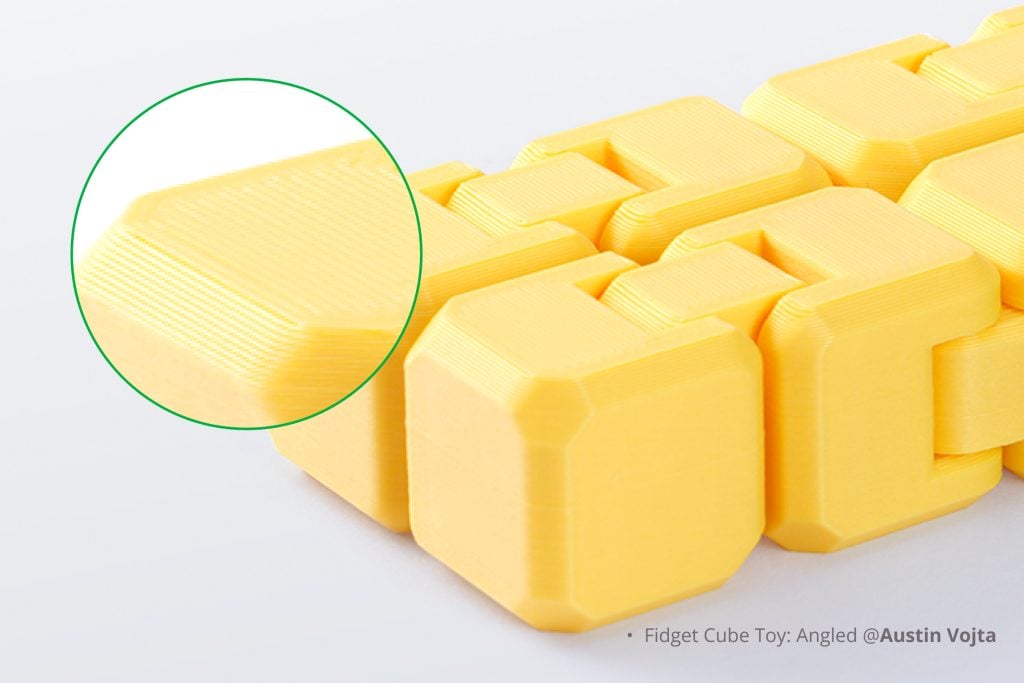
providing a better blend and harmonious appearance compared to other surfaces.
Important in use
- Before printing with any filament it is recommended to apply adhesive to the Engineering Plate. Solid adhesive makes it easier to remove the part, but due to its greater thickness and difficulty in applying evenly, the stability of the print and the quality of the first layer are usually not as good as when using liquid adhesive. On the other hand, liquid adhesive can make workpiece separation difficult. Choose the right type of adhesive according to the filament, the printing medium and the specific conditions. See the official Bambu Lab Wiki for more information.
- When using a squeegee to remove patterns, apply proper technique. If the pattern is adhered too strongly, apply alcohol between the pattern and the plate to reduce adhesion and facilitate separation. This prevents damage to the pattern, plate or injury due to excessive force.
- Increasing the temperature of the heating platform increases adhesion. Adjust the temperature according to specific requirements to achieve optimum adhesion.
- On X1, P1, and A1 series printers, it is necessary to wipe the nozzle in the platen cleaning area several times to remove residual material before auto-leveling. The coating in this area will gradually wear off – this is normal and does not affect print quality or nozzle life.
- The accumulation of dust and grease reduces adhesion. Regular cleaning of the plate with warm water and dish detergent is recommended. Do not use unforeseen cleaning agents.
- Bambu Lab recommends using only the official Bambu Lab adhesive on their plates. The company is not responsible for damage caused by using third party adhesives. Do not clean the Engineering Plate with acetone as this will damage the surface.
- Always wait a few minutes before removing patterns to allow the plate to cool. This facilitates separation and prolongs product life.
- The latest firmware includes significant improvements to the Bambu Engineering Plate calibration via Micro Lidar and is fully compatible with the automatic calibration process.
- Engineering Plate is considered a consumable that wears out over time. The warranty only covers manufacturing defects and not cosmetic damage such as scratches, dents or cracks. Only defective sheets upon receipt are covered by the warranty.
Recommended settings
Please note that you may need to adjust other settings in the slider depending on the print model and the requirements of the filament used.
| Materials | Heating platform temperature | Is glue required? |
|---|---|---|
| PLA / PLA-CF / PLA-GF | 45~60°C | Solid glue / Liquid glue |
| PETG / PETG-CF | 60~80°C | Solid glue / Liquid glue |
| ABS (not for A1 mini) | 90~100°C | Solid glue / Liquid glue |
| ASA (not for A1 mini) | 90~100°C | Solid glue / Liquid glue |
| TPU | 35~45°C | Solid glue / Liquid glue |
| PVA | 45~60°C | Solid glue / Liquid glue |
| PC / PC-CF (not for A1 mini) | 90~110°C | Solid glue / Liquid glue |
| PA/PA-CF/PAHT-CF (not for A1 mini) | 90~110°C | Solid glue / Liquid glue |
| PET-CF (not for A1 mini) | 80~100°C | Solid glue / Liquid glue |
Product Specifications
| Material | Polyester powder + manganese steel |
| Surface temperature resistance | Up to 120°C |
| Fat | 0.5 mm |
| Useful print size | X1C / P1P / P1S / A1 / P2S – 256 × 256 mm H2D / H2S – 350 × 320 mm H2C – 330 × 320 mm |
| Pack size | X1C / P1P / P1S / A1 / P2S – 315 × 295 × 15 mm H2D / H2S – 393 × 380 × 15 mm H2C – 393 × 380 × 15 mm |
| Weight of packaging | 0.50 kg 0.78 kg 0.78 kg |




There are no reviews yet.